Waal River
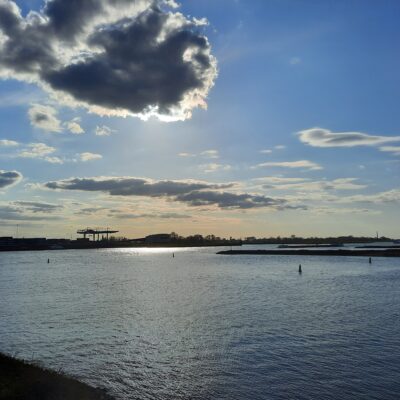
I love running along the Waal river because it gives beautiful views. My mother used to swim across the river as a child. The Waal plays an important role in the economy and history of Nijmegen during floods and wars. Operation Market Garden during WWII focused on capturing the two bridges across the Waal. Now there are several bridges that connect the city with the other side of the river.
De Waagh
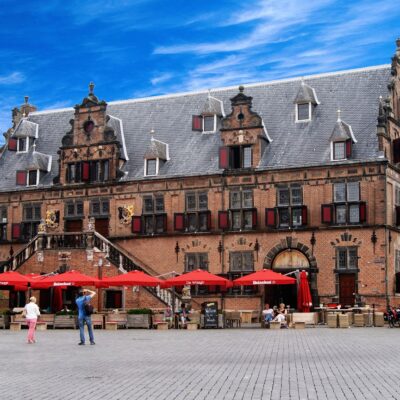
De Waagh (weigh house) is special to me because my grandfather used to have his office here when he was director of local government structures. It was originally used to weigh butter in the Middle Ages and to guarantee fair trade. The current building was rebuilt in 1612-13 in Dutch Renaissance style. It has been used for several local government functions throughout the ages but now it is a restaurant with beautiful terrace on the Grote Markt (Big Market),
Afferden
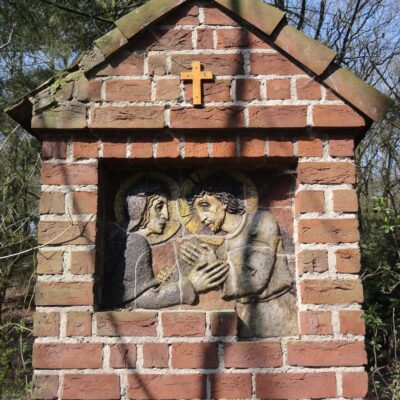
Afferden, Hernen and Leur have been threatened for centuries by the Waal river flooding.Around 1300 the river area was divided into protected areas within the dykes where the river water no longer had access, and areas outside the dykes, the flood plains, which were still flooded at high tide.Nevertheless, in January 1995, all residents of Afferden and surrounding villages were evacuated because the water in the Waal was dangerously high after heavy rainfall. Fortunately, the water dropped just in time.
Timbuktu, Mali
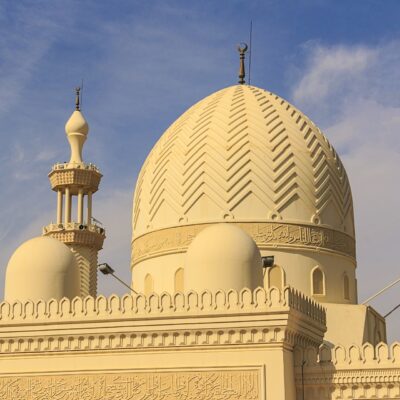
Tombouctou, Mali, commonly known as “Timbuktu,” is located well off the beaten track, yet still holds an appeal to Westerners, capturing the imagination of travelers and adventurers for generations. Founded over 800 years ago by the Tuareg desert peoples, no other city remains as synonymous with the fabulous, the lonely, and the remote. The mausoleums of Timbuktu have long been places of pilgrimage for the people of Mali and neighboring countries.